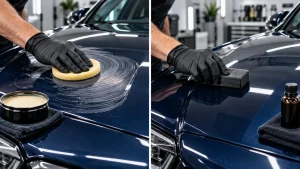
When people talk about ceramic coating, you usually see pictures of brand-new, six-figure supercars. But here is a secret: ceramic coating is actually one of the best investments you can make for an older car.
If your daily driver or weekend classic is starting to look its age, factory paint can become dull, oxidized, and rough to the touch. A professional ceramic coating acts like a time machine for your vehicle’s exterior.
Here is why your older car deserves this ultimate paint upgrade.
What Is Ceramic Coating?
Before deciding if ceramic coating is right for an older vehicle, it’s important to understand what it does and what it doesn’t do. Ceramic coating is a liquid polymer that chemically bonds with your vehicle’s clear coat. Once cured, it creates a durable protective layer over the paint.
A quality ceramic coating helps:
- Protect against UV rays
- Resist chemical stains and oxidation
- Repel water and dirt
- Reduce contamination from road grime
- Make washing easier
- Enhance gloss and color depth
What it does not do is hide scratches, remove oxidation, or repair damaged paint. The coating protects the condition of the surface underneath it. If the paint is neglected before installation, the coating simply seals those imperfections beneath its protective layer.
Benefits of Ceramic Coating for Older Cars
Protects Restored Paint
Once paint correction restores the finish, ceramic coating helps preserve those improvements by shielding the surface from everyday contaminants.
Slows Future Oxidation
Older paint is often more vulnerable to UV damage. Ceramic coating adds another layer of defense against sunlight, helping reduce future oxidation and fading.
Makes Washing Easier
Dirt, mud, pollen, and road grime don’t bond to coated paint as easily. This means quicker washes with less scrubbing, reducing the chance of adding new swirl marks.
Enhances Gloss
One of the biggest visual improvements owners notice is the depth and richness ceramic coating adds to the paint. Even older vehicles often appear significantly newer after proper correction and coating.
Improves Long-Term Value
While ceramic coating won’t increase a vehicle’s market value overnight, maintaining paint in excellent condition can improve resale appeal and reduce future detailing costs.
The Golden Rule for Older Cars: “Paint Correction is Key”
You cannot just wipe a ceramic coating onto an old, dirty car and expect good results. Because ceramic coatings are completely transparent and permanent, they lock in whatever is underneath them. If you apply it over scratches, swirl marks, or oxidation, you will trap those flaws forever.
For an older vehicle, a thorough multi-stage machine polish is mandatory. Once the paint is as flawless as possible, the ceramic coating is applied to seal the perfection.
The Risk of DIY Coating on Older Vehicles
Paint correction requires professional-grade polishing machines and an experienced eye to avoid cutting through the clear coat while still removing defects effectively. Older vehicles have thinner clear coats from years of washing and environmental exposure, which means there’s less room for aggressive correction without causing damage.
Beyond that, ceramic coating application itself requires controlled conditions, precise timing, and proper technique to cure correctly. A coating applied in dusty, humid, or temperature-inconsistent conditions won’t bond the way it should, which directly affects how long it lasts and how well it performs.
How Do Professionals Apply Ceramic Coating?
Applying ceramic coating to older, delicate paint requires a precise, multi-step restoration process:
- Decontamination: Clay bar and chemical washes pull out decades of embedded metallic dust.
- Inspection: Digital gauges measure clear coat thickness to ensure the paint can be polished safely.
- Paint Correction: Machine polishers shave away a microscopic layer of damage to restore the original color.
- Alcohol Prep: An Isopropyl Alcohol wipe leaves a bare surface for optimal chemical bonding.
- Hand Application: Technicians apply the liquid ceramic in small sections, leveling it to prevent streaks.
- Controlled Curing: The vehicle cures in a controlled environment to ensure maximum coating durability.
Also Read: How to Polish Your Car Wheels Like a Pro
Match the Best Coating to Your Paint
- Traditional Quartz/Glass (SiO2)
This classic nano-coating formula provides an incredible, glass-like gloss. It forms a hard layer over vintage clear coats, offering entry-level scratch resistance and long-lasting paint depth. - Graphene-Infused Ceramic
This advanced carbon-infused variant offers extreme heat resistance to survive hot city summers. It actively reduces water spotting on flat surfaces like the hood and roof of your car. - Self-Healing Ceramic
These premium elastomeric coatings use ambient heat from the sun to automatically fade away micro-swirls. It keeps your older vehicle looking freshly polished without requiring constant maintenance.
When Should You NOT Ceramic Coat an Older Car?
Ceramic coating is a protectant, not a cure for dead paint. Do not waste your money if your vehicle has the following issues:
- If your paint is flaking or looks like it has a sunburn, the clear coat is failing. The coating will peel right off with it.
- If a scratch catches your fingernail, it has penetrated the clear coat. Coating will not fix it.
- Ceramic liquid cannot bond to oxidized iron or bubbling paint.
In these scenarios, your money is better spent on a professional respray or bodywork repair.
Final Words
Your car doesn’t have to look its age. With the right paint correction and a professional ceramic coating application, an older vehicle can come out of our shop looking better than it has in years.
At NYC Wheel Professionals, our technicians have been doing this for over a decade. We use paint thickness gauges to measure clear coat depth before correction. Every ceramic coating application at our shop goes through a complete multi-stage prep process because that’s the only way to deliver results worth paying for.
Call us or visit our shop today for ceramic coating in NYC
Frequently Asked Questions
How long does ceramic coating last on an older vehicle?
Professional ceramic coatings typically last between two and seven years, depending on the product used, surface preparation, maintenance routine, and environmental conditions.
Can ceramic coating fix existing scratches on my older car?
No. Ceramic coating is transparent and will not fill in or hide scratches. It can make them more visible under certain lighting. Scratches need to be addressed through paint correction or spot repair before the coating is applied.
Can ceramic coating be applied to a car with faded paint?
Yes, provided the paint and clear coat are still in good condition. Light fading caused by oxidation can often be improved through paint correction before ceramic coating is applied. If the clear coat has failed, repainting may be necessary first.
Is ceramic coating better than waxing an older car?
Yes. While wax offers short-term protection that lasts only weeks or months, ceramic coating provides significantly longer-lasting protection, greater chemical resistance, enhanced gloss, and much easier maintenance.
Is paint correction always required before ceramic coating?
Not always, but it is strongly recommended for most older vehicles. Paint correction removes oxidation, swirl marks, and minor scratches, allowing the ceramic coating to bond properly and deliver the best possible finish.